Olympus PEN Mini E-PM1
The best camera under $150 I've used in 2026
The Olympus PEN Mini E-PM1 is the camera that kicked off my interest in photography. I paid under $100 on eBay with a lens, and it's small enough to pocket, simple enough to learn in an afternoon, and makes photos with color that pops. It misses shots when things move fast, and there's no viewfinder, but for travel and everyday carry it's hard to beat at the price.
Should you buy this camera?
Where it lands on my buy-it scale. Five is a coin flip; ten is a camera I'd hand to anyone.
- Super fun to use, with a reassuring shutter clunk on every shot
- Very pocketable with a pancake lens on it
- Great shots with color that pops off the screen
- Super simple: you can learn it in an afternoon
- Surprisingly good in-body stabilization for a 2011 camera
- Opens the whole Micro Four Thirds lens family
- Limited manual controls
- Slow autofocus that misses fast-moving moments
- Video isn't really a thing
- No viewfinder, and the rear screen is hard to see in bright sun
- No weather sealing
Where it shines
Scores reflect the reviewer's first-hand experience using this camera for each kind of shooting, 0 to 5.

Who it’s for
Someone who wants to find out whether photography is for them without spending much. The E-PM1 is small enough to live in a jacket pocket, simple enough to learn in an afternoon, and it takes Micro Four Thirds lenses, so it can grow with you. If you’re coming from a phone, or from an older DSLR that mostly stays home, this is a cheap way to get a real camera back in your hand.
What it’s like to shoot
This camera kicked off my interest in photography. I was deep in learning everything I didn’t know, and I landed in a part of the internet that’s light on “buy the newest thing” and heavy on “buy a camera that’s fun and affordable”: Tom Calton, Micro Four Nerds and, for an older-school take, James Popsys.
That corner of the internet pointed me to the E-PM1 as an ideal first camera, and I grabbed one in an eBay deal for under $100, lens included. It’s slow and measured, with a reassuring “KACHUNK” every time you take a shot, and I loved how it compared to my older Canon 80D. It took fun photos. I learned to drop the exposure a tad, and I got some shockingly cool shots, with color popping off the screen.
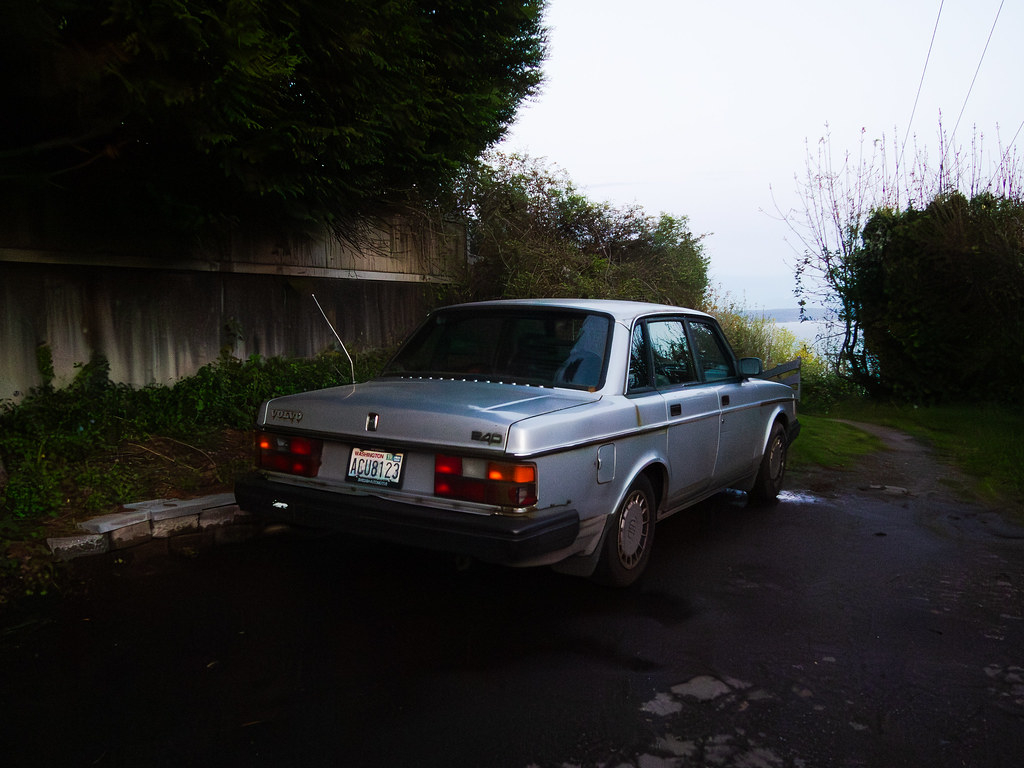
The stabilization was a leap ahead for me; I had never used a camera with in-body stabilization before. The 80D went almost permanently out of rotation.



Strengths
It’s super fun to use and very pocketable, especially with a pancake lens like the Panasonic 14mm f/2.5 on the front. The shots are great and the color is amazing. It’s super simple, the in-body stabilization is surprisingly good, and because it’s Micro Four Thirds the whole lens family is open to you, from cheap kit zooms to the lenses I later used on my OM-1.


See all of my photos from this camera in the E-PM1 gallery.
Weaknesses and workarounds
I miss shots when things are happening fast with this camera, but the shots it does take are always great. The manual controls are limited, video isn’t really a thing, and there’s no weather sealing.
There’s no viewfinder, and the rear screen is barely usable in the sun. The E-PM1 has an accessory port that takes Olympus’s VF-2 or VF-3 clip-on electronic viewfinder, if you can find one used.
How it compares
The PEN family from this era all sells cheap used, so the real question is which one. The E-PL3 has the same sensor in a slightly bigger body with a tilting screen. The E-PM2 and E-PL5 step up to a 16MP sensor and a touchscreen. Panasonic’s GF3 is the same size but has no in-body stabilization, which matters with older unstabilized lenses. I have a GF3 too, and I’ll post a direct comparison at some point. If you outgrow it, the same lenses carry over; my next step was a pair of Four Thirds DSLRs, including the Panasonic L1.
Today’s lowest used price is on the E-PM1 detail page.
Verdict
No frills, excellent for travel and everyday carry, and the best camera under $150 I’ve used this year. If you want to find out what photography feels like with a real camera in your pocket, buy the E-PM1.
Further reading
Frame & Focal found that it “matches the GF2 in image quality while shaving 41 g.” Tom Calton, one of the channels that pointed me here, covers it in This Tiny $80 Camera SHOCKED Me With Its Quality!
Verdict
If you want a small, cheap, fun camera that takes real photos, buy the E-PM1. It made a better first camera for me than anything newer would have, and at under $150 with a lens it's an easy yes. Skip it if you shoot fast action or need a viewfinder.
Anyone who shoots sports, kids on the move or video, or who composes in bright sun. The autofocus is slow and there's no viewfinder.
Compare the Olympus PEN Mini E-PM1
This review captures the reviewer's experience with the Olympus PEN Mini E-PM1, not its current price. For today's lowest observed used price across the major used-gear sites, see the camera detail page. For how Should You Buy This Camera collects prices and computes deal scores, see /methods.