OM System OM-1
The OM-1 Mark I as my 2026 birding camera
I bought a used OM-1 at Glazer's Camera on the way out of town for a family trip to Oregon, and after three months of nearly daily practice it sits near the top of my list. Paired with the OM System 100-400mm II it catches small birds in flight before sunrise, and with the Leica 12-60mm it handles travel, portraits and street. The OM-1 Mark II is a light update, which makes the original a deal.
Should you buy this camera?
Where it lands on my buy-it scale. Five is a coin flip; ten is a camera I'd hand to anyone.
- Catches small birds in flight at 1/2000 s, even before sunrise
- Pro Capture took the most getting used to, and it changed how I shoot birds
- With the 100-400mm II it keeps up with my friend's Sony A1 for birding
- A good grip, close to the G9 II's
- Two custom modes let me switch from birds to everyday color in one turn of the dial
- Lightroom noise reduction cleans up ISO 10000 and above well enough to keep
- Used prices sit well under launch price now that the Mark II is out
- Not pocketable, and heavy once the 100-400mm is on it
- The grip is a step behind the G9 II's
- Noise shows up early at birding ISOs, so plan on noise reduction in post
- A steep learning curve: my first trip was more luck than skill
- Low light trails full frame; good technique and post-processing close most of the gap
Where it shines
Scores reflect the reviewer's first-hand experience using this camera for each kind of shooting, 0 to 5.
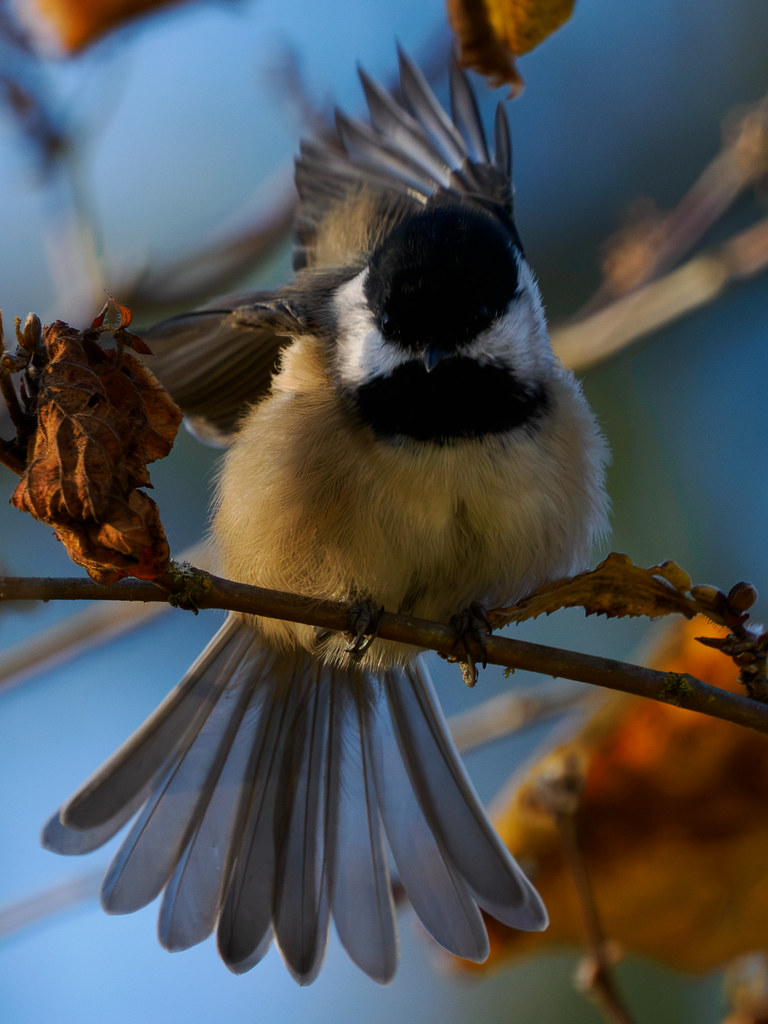
Who it’s for
Someone who wants to photograph birds and is willing to practice. The OM-1 pairs a stacked sensor and fast autofocus with Micro Four Thirds lenses, so a 400mm lens (800mm equivalent) fits in a shoulder bag. Once the birding setup is dialed in, a second custom mode turns it into a travel and portrait camera. If you shot a G9 II or another modern body and caught the birding bug, this is a good place to land.
What it’s like to shoot
My first test run with the Panasonic G9 II gave me a taste for birds. A family trip to (exotic) Oregon seemed like the place to try it. I was fiendishly looking for deals in the run-up, and the excellent Glazer’s Camera in Seattle had an OM-1 at an incredible price. I made a last-minute detour to grab it on the way out of town.
For the trip I paired it with a loaner Olympus 40-150mm f/2.8 PRO and an MC-14 1.4x teleconverter. I did not know how to use this camera well, but I still got some great shots. The detail on passing gulls would bring tears to your eyes.

Since then I’ve practiced nearly every day, mostly with the Panasonic Leica 12-60mm and the OM System 100-400mm II, and I’m getting better. My own grade: a solid B-.
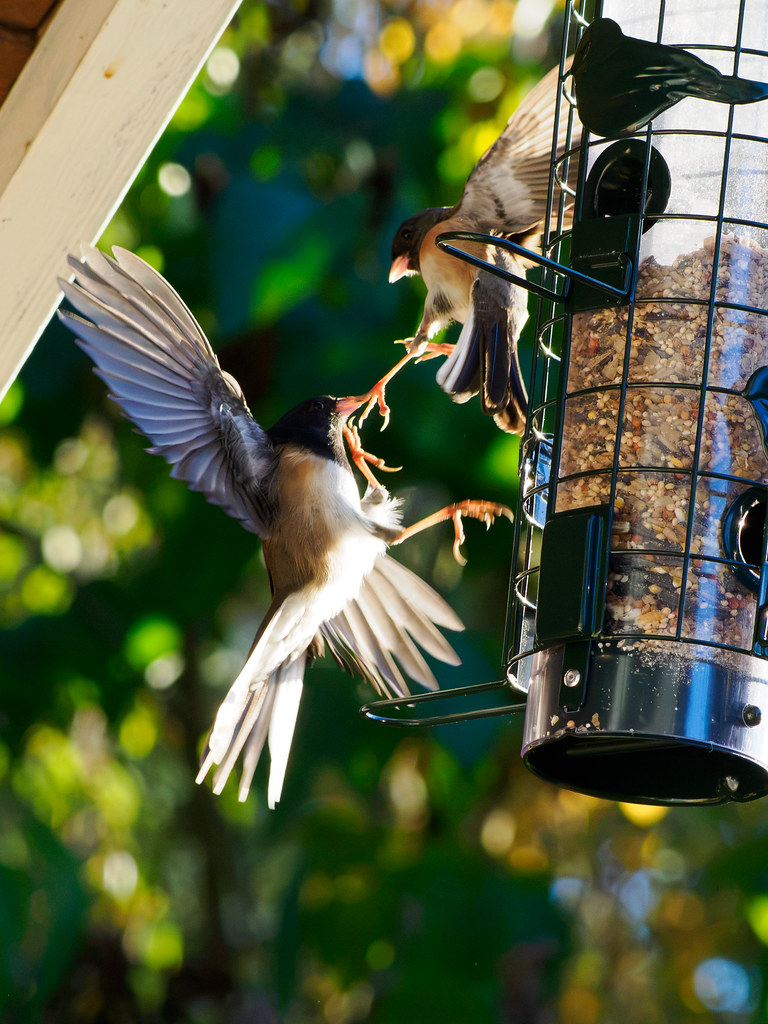


Take the time to learn the craft: the patience, and the art of getting a bird in the right place at the right time. Dial in your ISO and shutter speed and life is good. Noise reduction in Lightroom (and other tools) will be your friend.
My birding settings
- Exposure mode: Manual, with shutter speed as the main thing I adjust
- Shutter speed: 1/2000 s for most birds, 1/5000 s for hummingbirds
- Aperture: Anywhere from wide open to f/7.1
- ISO: Auto, with a high ceiling. My keepers run from ISO 3200 to 25600
- Autofocus: C-AF
- Drive mode: Pro Capture
- Post: Lightroom Denoise on anything above ISO 6400
Pro Capture took me the longest to get used to. The camera buffers frames while you half-press the shutter, so when you press all the way it keeps the moment before you reacted. Once it clicked, it was a game changer for takeoffs and landings, where my own reaction time used to cost me the shot.
Strengths
Birding aside, I went through a phase where I would delight (?) my wife with long talks about whether I liked this camera. Sure, I could catch a small bird in flight before sunrise, but did I like how the photos looked?
So I spent a week shooting only for feel: flowers, color contrasts, light through the window. It landed. I set up my second custom mode for that kind of shooting, and this camera now ranks near the top of my list.


The grip is good. To my taste it’s a step behind the G9 II’s, but solid. Paired with the 100-400mm, I can keep up with my friend’s Sony A1 when we go birding.
See all of my photos from this camera in the OM-1 gallery.
Computational photography
OM System shines here. The OM-1 carries a full set of in-camera computational modes: High Res Shot on a tripod or handheld (50MP handheld), Live ND up to six stops, Live Composite, in-camera focus stacking, Starry Sky AF, and the Pro Capture mode I already lean on for birds. So far I’ve only used two of the others, the High Res modes and Starry Sky AF for night skies, and there’s a lot left to try.
My first Starry Sky AF attempt came on the Oregon trip. It isn’t the most amazing night sky photo, but it was a first try, and I was very happy with it.

For what each mode does and which cameras have it, see our computational photography guide.
Weaknesses and workarounds
This camera is not pocketable, and with the 100-400mm on it you’ll carry it in two hands. Noise shows up at the ISOs birding pushes you to, which is why Lightroom noise reduction is part of my routine. And it takes practice. My first trip produced good shots more by luck than by skill.
Then there’s low light. A lot has been said about how Micro Four Thirds performs against full frame when the light drops. Having shot both, I think there is something there. You can manage it with good shooting craft and post-processing: get the exposure right in camera, and let noise reduction handle the rest.
How it compares
The OM-1 got my money over the Panasonic G9 II because a deal showed up first. The G9 II has the better grip; the OM-1 is the birding camera I’ve learned.
There is a newer model, the OM-1 Mark II. It keeps the same 20MP stacked sensor and adds human detection, about double the RAW buffer, Live GND and rubberized dials, and it launched at $2,399, $200 above the original. It’s a light update. In her Micro Four Thirds tier ranking, Emily Lowrey at Micro Four Nerds put it in a tier of its own: “Could have been an email.” It’s a bit more than that. For what I do, the new version isn’t a world apart, which makes the original OM-1 a deal. Today’s lowest used price is on the OM-1 detail page.
For birding, I hold my own next to a friend’s Sony A1 with a lighter, cheaper kit.
Verdict
Not pocketable, great to carry, and it shoots travel, birds, portraits and street. If you want to learn bird photography and are willing to put in the practice, buy the OM-1.
Further reading
DPReview gave it a Silver Award (87%) and called it “probably the best all-round Micro Four Thirds camera yet.” PetaPixel titled its review “The Best Micro Four Thirds Camera Ever Made.” Emily Lowrey at Micro Four Nerds compared the OM-1 Mark II with the G9 II and landed where I did for birds: “If you’re 100% into wildlife, bird, and sports photography, get the OM1ii.” The bird detection, she writes, “is nothing short of a revelation.”
Verdict
If you want to photograph birds on Micro Four Thirds, buy the OM-1. It carries a long lens without much weight, catches small birds in flight, and shoots travel and portraits well once you set up a second custom mode. The Mark II changed little that matters for how I shoot, so a used original is the better buy today.
Anyone who wants a camera that fits in a pocket, or who won't put in the practice. The OM-1 rewards time spent learning it, and the 100-400mm makes it a two-handed kit.
Compare the OM System OM-1
This review captures the reviewer's experience with the OM System OM-1, not its current price. For today's lowest observed used price across the major used-gear sites, see the camera detail page. For how Should You Buy This Camera collects prices and computes deal scores, see /methods.