Guides / Your first camera
Getting started with photography: your first camera in 2026
How I got started, again, and five used starter kits from about $230 to $700. Prices in this guide are live: they come from the previous night's crawl and change as the market does.
Last updated August 2026
I feel uniquely prepared to write this. I am very much still getting started.
I've been through a few waves of photography before this one. I was interested, but it never stuck. I wasn't happy with the results, I got busy, and there were plenty of other reasons the earlier attempts didn't take.
This time, back in late winter, I was walking my sons to school and decided to take pictures. It was bleak. Seattle in February is dreary, at least to the untrained eye, which mine definitely was. I took out my Canon 80D and committed to taking some photos. I shot a fire hydrant. I shot some winter berries on a bare tree. And I kept it up. I wasn't getting much better, but I was burying my lack of artistic eye under hundreds of deeply mediocre photos. I decided to be okay with being kind of bad, and I stuck with it.
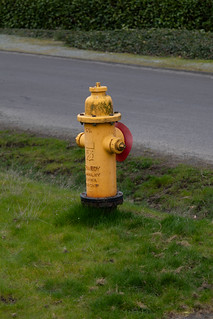
Let's just say I'm now pretty okay. A stranger said they liked one of my photos once, so I'm having the "Professional Photographer" business cards printed as we speak.
What you need to get started
- A camera
- Photos you took with the camera
That advice isn't very helpful, but people with amazing skills and amazing gear keep giving it, so let's assume there's some truth in it.
Here's what it looked like for me. I started by watching roughly 100 hours of camera videos on YouTube. Shout out to Micro Four Nerds, Tom Calton, Hunter Creates Things, and James Popsys. Underneath all the excitement about whatever launched that week, one theme kept surfacing: older cameras are often functionally as good as new ones.
Armed with that, I kept shooting my eight-year-old Canon 80D, and I picked up an Olympus E-PM1, a Micro Four Thirds camera from 2011, for $80. I assumed my bulky Canon would be the superior tool. The E-PM1 felt amazing. It's slow. The shutter sound is hilariously clunky, and I love it. But when I underexpose a little, it takes pictures that make me happy. They come out a bit dreamy. The colors struggle when they get too vibrant, and somehow that fits exactly what I'm after when I'm walking around. It was $80 well spent.
So I started carrying the camera that was more fun. The E-PM1 made me take slower pictures, because slow is all it does. I was crouching. I was holding it above my head and guessing at the frame, since there's no viewfinder. And I started getting shots that felt like what I saw, and not just what the camera captured.
What worked
I found a camera I liked, could afford, and had fun shooting. I used it to practice. I found its limits, then added one or two pieces of kit to fill the gaps. I got away without needing more than that, and mostly still do.
Starter kits
Every one of these is a body plus one lens, ordered cheap to less cheap. Prices are the lowest used price we tracked last night, and they move. Click through to a model page to see where today's price sits against the last 90 days.
Olympus E-PM1 + 14-42mm EZ
The beater about $230This is my $80 camera, though the tracked price starts higher now. Slow autofocus, no viewfinder, wonderful little files. Bodies often show up bundled with an older 14-42mm for less than buying the two apart, and any version of that kit zoom is fine.
Nikon D750 + 50mm f/1.8G
Full frame about $330- Nikon D750 $234
- Nikon AF-S 50mm f/1.8G around $100 used
A full-frame body that sold for $2,299 in 2014. Big, unfashionable, and the files hold up against cameras that cost five times as much. The 50mm f/1.8 is the classic first prime for a reason.
Canon EOS 80D + 18-55mm + 50mm f/1.8
Where I started about $370My starting camera, and the one kit here with two lenses, because both together cost about $50. The 18-55mm teaches you which focal lengths you actually use. The nifty fifty teaches you what blurry backgrounds are for. Any old Canon or Nikon DSLR works the same way; this is just the one I know.
Panasonic Lumix G100 + 12-32mm
The newest about $460Small, light, has a real viewfinder, and the 12-32mm pancake zoom keeps the whole kit jacket-pocket sized. Often sold together as a kit for less than the parts.
Fujifilm X-T20 + XC 35mm f/2
The Fuji one about $700- Fujifilm X-T20 $634
- Fujifilm XC 35mm f/2 $65
The "literally any Fuji you can afford" pick. The dials teach you exposure by making you look at it, the colors are the reason people don't shut up about Fuji, and the XC 35mm f/2 might be the best $65 lens we track.
Sony makes fine cameras too. The barrier to entry has just kept me out, and this list is cameras I'd hand a beginner without wincing at the price.
Go take the pictures
Whichever one you pick, the camera is the small part. Take it on the walk. Shoot the fire hydrant. Be okay with being kind of bad for a while. That part's free.
Want real shooting time on a body before your money is committed? See how to test a camera before you buy.