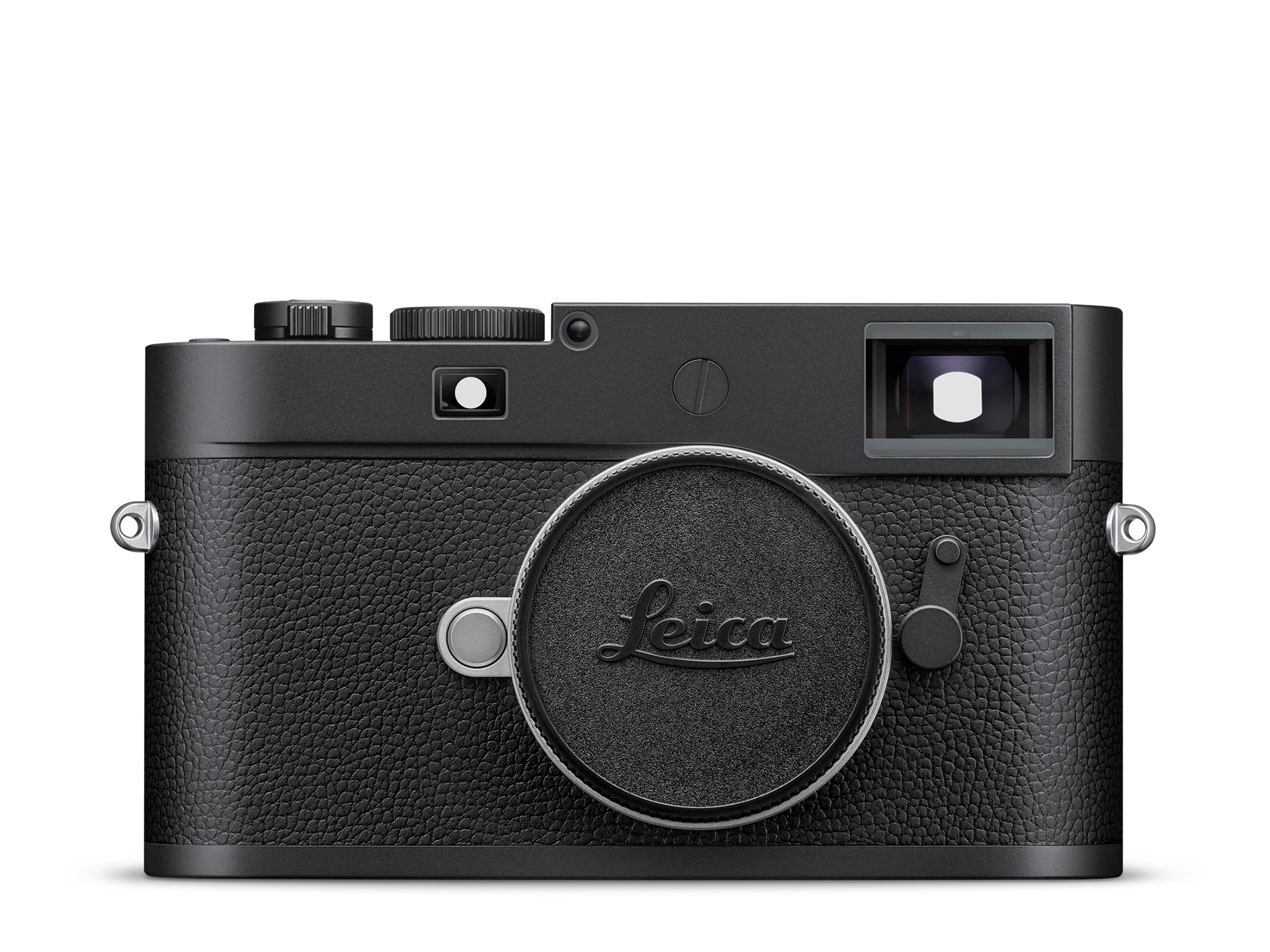
Leica M11-D
Selling at or above MSRP
How we compute thisThe used market is asking the $9,195 launch price or more. No discount right now, which usually means a discontinued or hard-to-find body trading on demand. We've seen this body as low as $8,000 on Aug 21, 2026.
- Lowest now
- $9,316
- MSRP
- $9,195
- vs MSRP
- +1%
- 90-day low
- $8,000
- All-time low
- $8,000 (Aug 21, 2026)
- 30-day trend
- +12.9%
Latest pricing by source
Each row is a direct observation from the seller. How this works.| Source | Condition | Price | Listings | Observed | Link |
|---|---|---|---|---|---|
| keh | excellent plus → excellent | $9,316 | 1 | Observed yesterday | view listing |
| keh | new → mint | $10,950 | 1 | Observed yesterday | view listing |
| mpb | like new → mint | $9,619 | 2 | Observed yesterday | view listing |
Price history
One point per day per (source, grade) pair, connected with lines. Hue marks the source; lightness within a hue marks the condition (darker = better grade). The dashed line is launch MSRP.
See Methods notes #1.1, #1.2, #1.3, #1.4.
Specs
- Brand
- Leica
- Family
- Leica M
- Category
- body
- Body type
- Rangefinder
- Mount
- Leica M
- Sensor
- Full Frame
- Megapixels
- 60 MP
- Lens type
- —
- Sensor family
- Leica 60MP BSI CMOS (M11/Q3/SL3)
- IBIS
- no
- Weather sealed
- No
- Max video
- no video
- Max native ISO
- ISO 50,000
- Weight
- 581 g
- Dimensions
- 139 × 80 × 39 mm
- Body material
- aluminum/magnesium
- Released
- 2024-09-19
- Status
- current
Notes
M11 with no rear LCD (display-less).
Computational features
Screenless rangefinder M; deliberately stripped of computational features beyond basic multi-exposure.
Autofocus & action
- AF system
- Manual focus only
- Burst (mechanical)
- 4.5 fps
- Buffer
- ~15 DNG / 100 JPEG (3 GB)
- Pre-burst capture
- No
- Card slots
- 1 (Internal + SD)
- Sensor readout
- BSI
M11-D shares M11 internals; 256 GB internal storage plus SD UHS-II slot; no rear LCD by design.
More in this family
In our guides
Buying guides that feature this camera, with live prices from the same nightly crawl.
Similar cameras
Compare with another model
Compare 3+ camerasSample photos
Photos matching "Leica M11-D" on Flickr.
Browse shots on FlickrHow we compute each section
References on each chart link down here. More notes will land as new sections grow.
1. Price history
- #1.1 · Grade buckets
-
Each seller publishes their own raw condition labels (e.g. "Excellent+", "Like new minus", "Bargain"). Those are normalized to a small bucket set:
mint,excellent,good,fair,poor, andunknown. The "Latest pricing by source" table above shows both the raw label and the normalized bucket so you can audit any individual mapping. - #1.2 · Missing days
- A point is only drawn on a day when a snapshot existed for that (source, grade) pair. Lines connect across gaps so a series with sparse sampling still reads as a single trend, but absence of a point does not mean a stockout: it means we didn't see a listing at that grade that day.
- #1.3 · Color encoding
- Hue carries the source: terracotta = mpb, sage = keh, cobalt = B&H, honey = ebay. Lightness within a hue carries the condition: darker means a better grade (mint and excellent are darkest; poor is lightest). The dashed ink line is launch MSRP, included as a reference even though it isn't a price observation.
- #1.4 · Shipping
- Every price on this page is the item price, the number the seller puts on the listing. Where a seller quotes shipping we show it underneath as a separate line and add it up for you, because on used marketplaces it is not small: a lens listed at $189 can carry $74 of shipping, which is 39% on top. Dealers (mpb, keh, B&H) ship domestically free or flat and we do not ask them for a figure. Where eBay quotes nothing the row says so, because some listings calculate shipping from your address and we cannot know it; on the 2026-08-23 crawl that was about a third of eBay listings, and most of them were US sellers rather than overseas ones. Price history charts the item price throughout, so a series stays comparable to its own past.
- #1.5 · Lenses sold in several mounts
- A third-party lens like the Sigma 35mm f/1.4 Art is one optic in a dozen mounts, and the mounts don't sell for the same money, so each one gets its own page here. Listings are less tidy: plenty of them read "Sigma 35mm f/1.4 DG HSM Art Lens" and never say which mount that is. We reject a listing whose title names a different mount, but a title that names none can't be contradicted, and we keep it rather than leave the page blank. That is a deliberate trade of precision for coverage, and it only applies to lenses carrying the note above the price table. If the exact mount matters to you, open the listing.